
Introduction
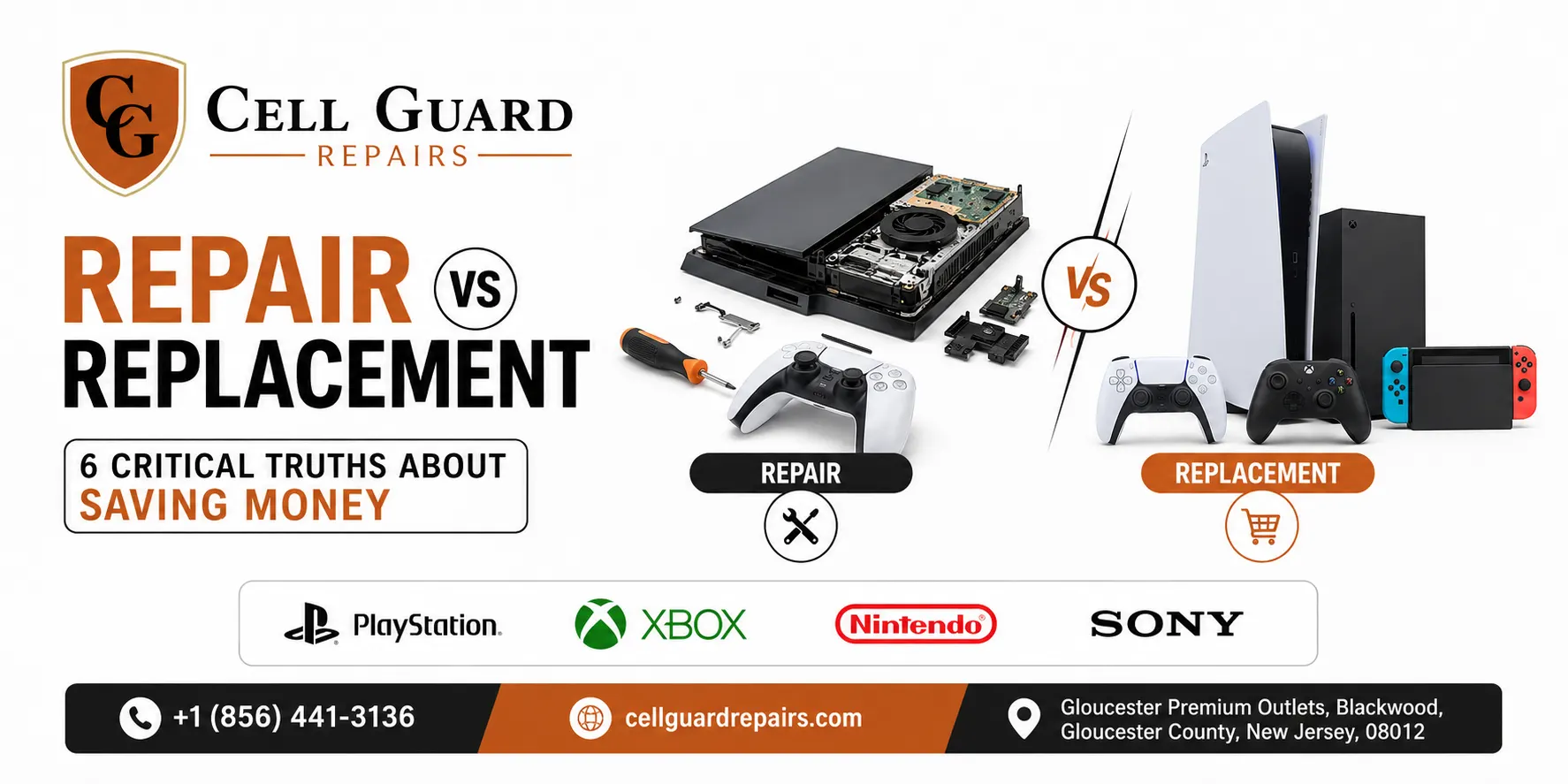
Your favorite gaming console just froze, crashed, or stopped reading discs, and now you’re stuck weighing game console repair vs replacement. It’s a decision more gamers face than you’d think, and the wrong choice can cost you hundreds of dollars unnecessarily. Whether it’s a PlayStation, Xbox, or Nintendo Switch acting up, understanding your real options before you spend a dime matters more than most people realize.
Consoles aren’t cheap, and neither are their replacements. Before you rush out to buy a brand-new system, it’s worth understanding exactly what’s involved in game console repair vs replacement decisions, because in a huge number of cases, repair is not only possible but significantly cheaper and better for the environment too.
In this guide, we’ll break down the most common console problems, what actually goes wrong internally, how much each option typically costs, and how to know when it’s genuinely time to replace instead of repair. By the end, you’ll have a clear framework for making this call with confidence.
Why This Decision Is Harder Than It Seems
On the surface, game console repair vs replacement sounds like a simple math problem. Compare the repair cost to a new console’s price, then pick whichever is cheaper. In reality, it’s a bit more nuanced than that.
A brand-new console purchase means starting from scratch. You’re not just paying for the hardware; you’re also factoring in the time to redownload games, reconfigure settings, and in some cases, deal with lost save data if it wasn’t backed up properly. Repair, on the other hand, usually preserves everything exactly as it was.
There’s also the environmental angle. Electronic waste is a growing problem, and repairing a working console instead of tossing it keeps another device out of a landfill. For many everyday gamers, that’s a meaningful bonus on top of the money saved.
Common Console Problems and What Causes Them
Understanding what typically goes wrong helps frame the game console repair vs replacement conversation more clearly. Here are the issues repair shops see most often.
1. Overheating and Shutdowns
Dust buildup inside the console is one of the most common culprits behind random shutdowns. Over time, dust clogs fans and heat sinks, causing the internal temperature to spike until the system protects itself by powering off.
2. Disc Drive Failures
Consoles that read discs slowly, make grinding noises, or refuse to recognize discs at all often have a worn or misaligned disc drive laser. This is one of the most frequently repaired issues across PlayStation and Xbox models.
3. HDMI Port Damage
A loose or damaged HDMI port can cause flickering screens, no signal at all, or a distorted picture. This usually happens from repeated cable removal or an accidental knock to the back of the console.
4. Controller Drift and Connectivity Issues
While this is technically a controller problem rather than the console itself, it’s a huge factor in the game console repair vs replacement decision, since replacing a controller is far cheaper than replacing an entire system.
5. Power Supply Failures
If your console won’t turn on at all, or the power light blinks without ever fully starting up, the internal power supply may have failed. This is a common but very repairable issue.
6. Fan Noise and Failure
A loud, grinding, or rattling fan is often a sign of a worn bearing or dust accumulation. Left unaddressed, this can lead to overheating and more serious internal damage.
Breaking Down the Real Costs
When people think about game console repair vs replacement, the first instinct is often to assume repair must be expensive. In most cases, that assumption is wrong.
Typical repair costs for common issues like disc drive replacement, HDMI port repair, or power supply fixes tend to fall well below the price of a new console, often by a significant margin. Cleaning and thermal paste replacement to solve overheating issues is usually one of the most affordable fixes available.
Replacement costs, on the other hand, mean paying full retail price for a brand-new system, plus potentially replacing accessories, memory cards, or accounting for a generation jump in specifications you didn’t necessarily want yet.
When you lay the numbers side by side, game console repair vs replacement usually favors repair, especially for issues that are mechanical or component-based rather than something catastrophic like severe liquid damage or a fried motherboard.
When Repair Almost Always Makes Sense
There are certain situations where choosing repair over replacement is close to a no-brainer:
- The console is otherwise working fine except for one isolated issue, like a disc drive or HDMI port
- The console is less than three to four years old
- You have games, saves, or a digital library tied to that specific console
- The repair cost is meaningfully lower than a replacement unit
- The issue is something a professional technician can diagnose and fix quickly
In these scenarios, repair almost always comes out ahead in the game console repair vs replacement comparison, both financially and in terms of convenience.
When Replacement Might Be the Smarter Move
Repair isn’t always the right call. Sometimes replacement genuinely makes more sense, particularly when:
- The console is several console generations old and parts are becoming harder to source
- Multiple internal components have failed simultaneously
- The cost of repair approaches or exceeds the cost of a new or refurbished unit
- You’ve been considering an upgrade anyway for better performance or storage
- The console has suffered severe physical damage, like being dropped from a significant height or exposed to liquid for an extended period
In these situations, sinking money into an aging or heavily damaged system may not be worth it, and replacement becomes the more sensible side of the game console repair vs replacement equation.
The Hidden Costs of Replacing Too Soon
Jumping straight to replacement without exploring repair can end up costing more than people expect. Here’s why.
You lose money on a working power supply, casing, and internal components that could have simply been repaired for a fraction of the replacement cost. Essentially, you’re throwing away parts that still had life left in them.
New consoles often require new accessories. Depending on the generation jump, controllers, charging docks, or storage solutions may not be backward compatible, adding unexpected costs on top of the console itself.
Setup time adds up. Redownloading your entire game library, reconfiguring account settings, and transferring save data (when possible) takes hours that a simple repair would have avoided entirely.
All of this reinforces why the game console repair vs replacement decision deserves more thought than a quick glance at price tags alone.
DIY Repair: Tempting but Risky
With so many tutorials online, it’s tempting to attempt console repairs yourself. For simple tasks like cleaning dust out of vents, this can be reasonably safe. But for anything involving opening the console’s internal casing, the risks increase significantly.
Consoles are built with small, delicate ribbon cables, tightly packed components, and specific reassembly requirements. A small mistake, like a misplaced screw or a torn ribbon cable, can turn a simple fix into a much bigger, costlier problem.
This is another reason the game console repair vs replacement decision often benefits from professional input rather than guesswork. A trained technician can diagnose the actual root cause instead of assuming, which prevents wasted time and unnecessary part purchases.
What a Professional Console Repair Typically Involves
When you bring your console in for repair, a knowledgeable technician generally follows a structured process to make an accurate game console repair vs replacement recommendation:
- Diagnostic Testing — Identifying the exact source of the problem rather than guessing based on symptoms alone.
- Cost Estimate — Providing a clear, upfront price so you can compare it against replacement before committing.
- Component-Level Repair — Replacing only the specific failed part, such as a fan, HDMI port, or disc drive laser.
- Internal Cleaning — Removing dust buildup that contributes to overheating and performance issues.
- Functionality Testing — Verifying the console works properly across multiple games and functions before it’s handed back.
This kind of transparent, itemized approach is exactly what makes a real difference when weighing your options. If you’re in the South Jersey area, Cell Guard Repairs offers this same diagnostic-first approach for consoles brought in for evaluation.
Questions to Ask Before Deciding
Before making a final call on game console repair vs replacement, ask yourself these questions:
How old is the console, and is it still receiving updates and game support?
Older consoles nearing the end of their supported lifecycle may not be worth repairing if a replacement is already on your radar.
Is the issue isolated, or are multiple things going wrong at once?
A single failed component is usually cheap to fix. Multiple simultaneous failures often signal a system nearing the end of its usable life.
What will the repair actually cost compared to a replacement?
Get an actual quote rather than assuming. Estimates are often lower than people expect for common issues.
Do you have games, saves, or subscriptions tied to this specific console?
If switching consoles means losing access to a library you’ve built over the years, that’s a strong point in favor of repair.
Is this a recurring issue, or a first-time problem?
A console that keeps breaking down repeatedly may be signaling deeper internal issues that make repair a temporary fix rather than a long-term solution.
Real Scenarios: Repair or Replace?
To make the game console repair vs replacement decision more concrete, here are a few common scenarios and how they typically play out.
Scenario 1: A console won’t read discs anymore, but everything else works fine.
This is a classic case where repair wins. A disc drive fix is usually quick, affordable, and restores full function without losing any data or settings.
Scenario 2: The console shuts off randomly during gameplay sessions.
Often caused by dust and overheating, this is another strong case for repair, particularly a deep clean and thermal paste replacement.
Scenario 3: The console was dropped and now won’t power on at all, with visible internal damage.
Depending on the extent of the damage, this may lean toward replacement, especially if multiple components appear affected.
Scenario 4: The console is five-plus years old and multiple issues have popped up over the past year.
This is a case-by-case call, but frequent repairs on an aging system often point toward replacement being the better long-term investment.
The Environmental Angle Nobody Talks About
Beyond cost, there’s a bigger picture worth considering in the game console repair vs replacement conversation. Electronics that are repaired rather than discarded reduce electronic waste, which is one of the fastest-growing waste categories globally.
Choosing repair when it’s a viable option isn’t just about saving money; it’s a small but meaningful way to reduce your personal footprint. Combined with the financial savings, this makes repair an easy recommendation whenever the console’s core hardware is still fundamentally sound.
How to Choose the Right Repair Shop
If you’ve decided repair is the way to go, choosing the right shop matters just as much as the decision itself. Look for a shop that offers:
- Transparent, upfront pricing before any work begins
- A clear diagnostic process rather than guesswork
- Experience specifically with gaming consoles, not just phones or tablets
- Willingness to explain your options honestly, including telling you when replacement might be smarter
A trustworthy shop won’t push repair just to make a sale. They’ll walk you through the game console repair vs replacement decision honestly based on what’s actually wrong with your device.
Frequently Asked Questions
Is console repair usually cheaper than buying new?
In most cases involving isolated issues like disc drives, HDMI ports, or overheating, yes. Full system replacement should generally be reserved for consoles with extensive or repeated failures.
Can a repaired console perform as well as before?
Yes, when the repair addresses the actual root cause. A proper diagnostic ensures the fix targets the real problem rather than just masking symptoms temporarily.
How long does a typical console repair take?
This varies by issue, but many common repairs like cleaning, fan replacement, or HDMI port fixes can be completed relatively quickly compared to the time it takes to set up a brand-new system.
Will I lose my saved games or settings if I get my console repaired?
Generally no, since repair doesn’t involve wiping the system unless absolutely necessary. This is one of the biggest advantages repair has over replacement.
What if I’m not sure whether my console is worth repairing?
A diagnostic assessment is the best way to know for sure. Getting an actual quote removes the guesswork from the game console repair vs replacement decision entirely.
Final Thoughts
Deciding between game console repair vs replacement doesn’t have to be a stressful guessing game. In many cases, especially with isolated issues like disc drive failures, overheating, or damaged ports, repair saves you money, preserves your data, and gets you back to gaming faster than starting over with a new system.
Of course, there are situations where replacement genuinely makes more sense, particularly with older consoles or extensive damage. The key is getting an honest, professional assessment before assuming the worst and reaching for your wallet unnecessarily.
If your console has been acting up, don’t guess. Reach out for a clear, honest evaluation of your game console repair vs replacement options before spending money you might not need to. A quick diagnostic today could save you the cost of an entire new system.
For anyone in the South Jersey area, the Cell Guard Repairs team is happy to take a look and walk you through your options with no pressure. You can request a repair here, explore the full range of services offered, or browse more helpful device care articles on the blog. You can also learn more about the team behind the shop on the about page.
Get in Touch
📧 Email Us: aroracases@gmail.com
Curious what other customers experienced with their repairs? Check out our Google reviews here.
 by
by