
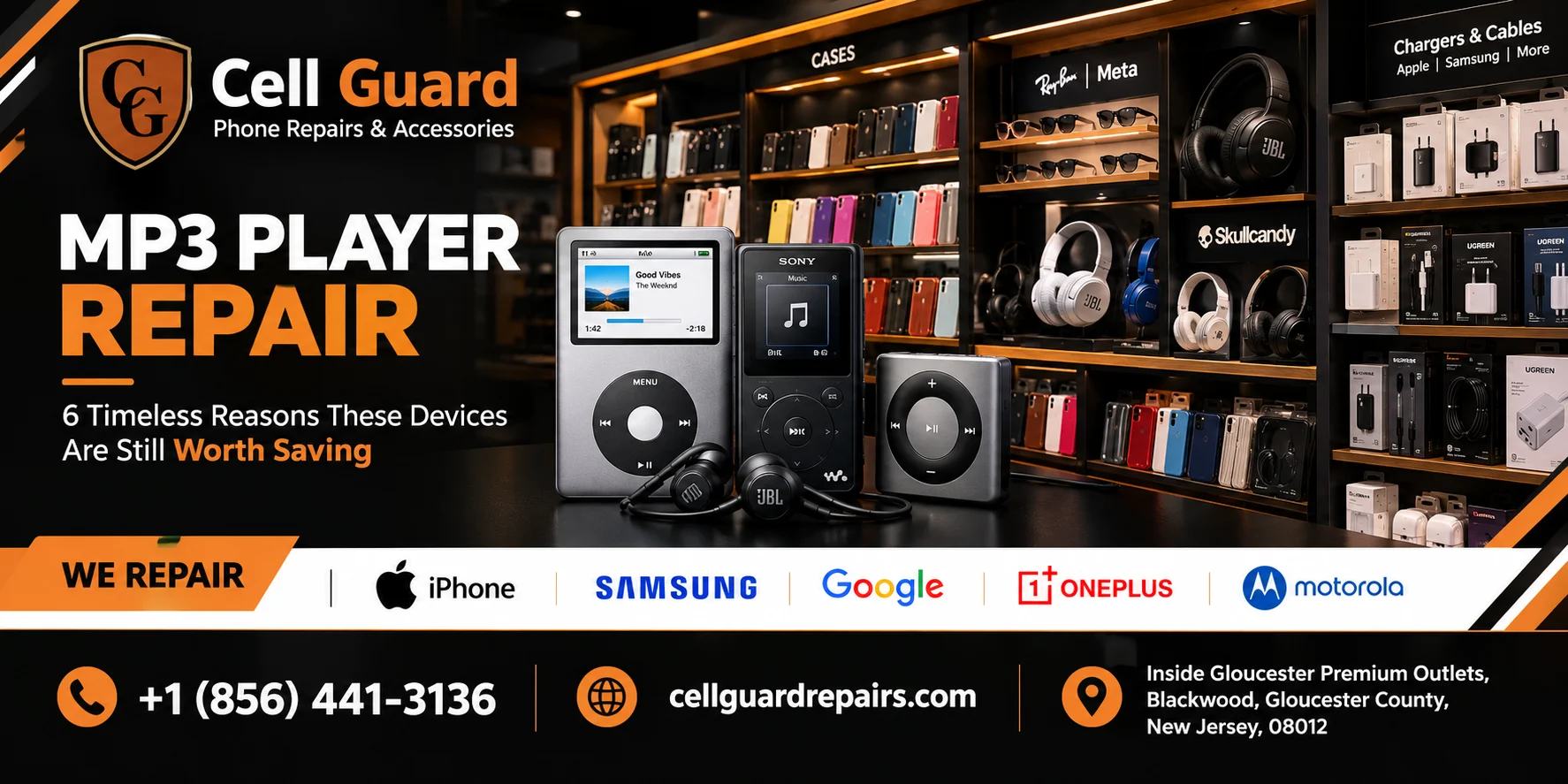
Streaming apps dominate how most people listen to music now, yet plenty of owners still reach for a dedicated device instead of their phone. MP3 player repair might sound like a service from a different decade, but it’s still a genuine need for a surprising number of people.
Gym-goers, musicians, audiophiles, and anyone who prefers a distraction-free listening experience often rely on these devices daily. When one stops working, replacing it isn’t always simple, since many models are no longer sold new.
This guide walks through why these devices still break down, the specific issues that come up most often, and why MP3 player repair remains a genuinely useful service rather than a relic of the past.
We’ll also cover which devices people still bring in most often, what a repair typically costs, and how to know whether repair or replacement makes more sense for your specific situation.
Why People Still Use Dedicated MP3 Players
Phones do a lot of things well, but a dedicated music player does one thing without distraction. No notifications, no app switching, just music.
Runners and gym-goers often prefer a small, lightweight device clipped to their clothing rather than carrying a phone. Musicians and audio engineers frequently rely on specific models for reference listening, since sound quality can vary meaningfully between devices.
Some owners simply hold onto a device they’ve had for years, loaded with a music library they’ve built carefully over time. For all of these reasons, MP3 player repair continues to be a real, ongoing need rather than something people rarely ask about.
Digital minimalism has also played a role in recent years, with some owners deliberately choosing a single-purpose device to reduce screen time and step away from constant notifications during their listening time.
1. Aging Batteries That Can’t Be Simply Swapped by Hand
Every MP3 player relies on a small internal battery, and like any lithium-ion battery, it degrades with age. Older devices are especially prone to this, since many are now a decade or more old.
Unlike a phone, these batteries are often glued or soldered in place, tucked behind delicate ribbon cables and tightly packed components. This isn’t a swap you can do with a butter knife and a YouTube video.
Why this needs professional attention: A rushed battery replacement on a small, older device risks damaging components that are difficult or impossible to source as replacements. Professional MP3 player repair uses the right tools to remove and replace the battery without harming anything else inside.
A common sign this is the culprit: the device shows a full charge but dies within minutes of active use, or won’t turn on at all despite being plugged in overnight.
2. Corroded or Damaged Charging Ports
Many older MP3 players use connector types that have fallen out of common use, like older USB standards or proprietary docking connectors. These ports accumulate lint and corrosion just like any charging port.
Because replacement parts for these specific connectors are harder to find, a botched attempt to clean or repair the port yourself can turn a fixable problem into an unfixable one.
Why this needs professional attention: A technician familiar with legacy connector types knows how to source or fabricate compatible replacement parts, and how to clean corrosion without damaging the surrounding solder points.
This issue often shows up as a device that only charges when the cable is held at a specific angle, or doesn’t charge at all despite trying multiple cables.
3. Failing Buttons, Wheels, or Screens
Mechanical parts wear out. Click wheels, physical buttons, and small screens all experience wear after years of regular use, especially on devices carried daily during workouts or commutes.
A click wheel that no longer registers scrolling accurately, or a screen with dead pixels or cracks, makes a device frustrating to use even if the core electronics are otherwise fine.
Why this needs professional attention: These mechanical components are delicate and specific to each model. Sourcing a compatible replacement part and installing it correctly requires both the right inventory and hands-on experience with these older device designs.
Owners often notice this gradually, with scrolling becoming less precise over months before eventually becoming unusable entirely.
4. Software or Firmware Corruption
MP3 players run on firmware that occasionally becomes corrupted, especially after an interrupted file transfer or an unexpected shutdown during use. A device that freezes, won’t turn on, or gets stuck on a logo screen is often dealing with this issue.
Some models require specific recovery procedures or software tools that aren’t obvious or well documented for the average owner.
Why this needs professional attention: A technician experienced with these older systems knows the correct recovery steps for specific models, avoiding the risk of making the problem worse through trial and error.
This is one of the more frustrating issues for owners, since the device often appears completely dead despite the hardware itself being perfectly fine.
5. Headphone Jack Issues
A crackling sound, audio that only plays from one side, or a connection that only works when the cable is held at a specific angle are extremely common symptoms on older MP3 players. The headphone jack takes a lot of physical stress over years of use.
This is one of the most frequent reasons people search for MP3 player repair, since it directly affects the one thing the device is meant to do.
Why this needs professional attention: Replacing a headphone jack involves careful soldering work on a small circuit board, which isn’t a repair that forgives a shaky hand or the wrong tools.
This issue tends to develop gradually, starting as an occasional crackle before becoming a constant, unavoidable problem with regular use.
6. Storage or Hard Drive Failure
Some classic MP3 players, particularly older iPod Classic models, used small spinning hard drives rather than flash storage. These mechanical drives are more prone to failure than modern solid-state storage, especially after being dropped or jostled repeatedly.
A device that clicks, whirs unusually, or fails to load its music library at all is often experiencing a failing drive.
Why this needs professional attention: Replacing an aging hard drive with a modern flash storage solution is a specialized repair that also requires transferring your existing library safely, something well worth leaving to someone experienced with these specific devices.
This particular issue often gets worse quickly once it starts, which is part of why prompt attention matters more here than with most other causes on this list.
Popular MP3 Players People Still Bring In for Repair
A wide range of devices still show up for repair on a regular basis. The iPod Classic remains one of the most common, largely because of its large storage capacity and its now-discontinued spinning hard drive.
iPod Nano and iPod Shuffle models are popular among gym-goers for their compact size, and their small buttons and click wheels are common points of mechanical wear.
Sony Walkman digital models, SanDisk Clip players, and dedicated audiophile devices from brands like Fiio and Astell&Kern also come in regularly, often from owners who specifically value their sound quality over convenience.
Older Zune devices and various budget MP3 players from the 2000s and early 2010s round out the list, usually brought in by owners who’ve held onto them for years and have no interest in switching to something else.
Regardless of the specific brand, the underlying causes tend to repeat across all of them, which is part of why experienced MP3 player repair benefits from broad familiarity with multiple device families rather than just one.
Some owners even bring in devices from lesser-known brands that were popular in specific regions or sold through specific retailers years ago. These can be some of the more interesting repairs, simply because documentation and parts sourcing require a bit more creativity than mainstream models.
Signs You Need Repair Rather Than Replacement
A device that’s still functionally sound but showing one isolated issue, like a headphone jack or battery, is usually a strong candidate for repair rather than replacement.
If the device holds sentimental value, contains a music library you’d rather not rebuild, or is simply no longer available to buy new, repair becomes the more practical option almost by default.
On the other hand, a device with multiple compounding issues, extensive physical damage, or one that’s been discontinued long enough that parts are genuinely difficult to source might be a case where a technician is upfront that repair isn’t the most practical path forward.
A quick, honest inspection is really the best way to know which category your specific device falls into, rather than guessing based on its age alone.
Why Replacement Isn’t Always a Simple Alternative
For a lot of these devices, there’s no direct modern equivalent to simply buy instead. Many models have been discontinued for years, and some owners specifically want their original device back rather than a different one.
There’s also the music library itself to consider. Years of carefully curated playlists, ripped albums, and personal recordings aren’t always easy to transfer to a new device without some technical know-how.
For collectors and long-time owners, the original device often has sentimental or practical value that a replacement simply can’t match. This is exactly why MP3 player repair remains relevant even in an era of streaming and smartphones.
There’s also a simpler, more practical reason many owners choose repair: a device they already know and trust, with settings and a library organized exactly the way they like, is worth more to them than starting over with something unfamiliar.
Finding Parts for Older or Discontinued Models
One of the bigger challenges in this space is sourcing quality replacement parts for devices that haven’t been manufactured in years. Batteries, screens, and connectors for older models aren’t always sitting on a shelf ready to go.
Experienced repair technicians often maintain relationships with specialty parts suppliers, or have access to compatible aftermarket components that work reliably in older devices.
This sourcing knowledge is part of what makes professional MP3 player repair valuable. It’s not just about having steady hands, but about knowing where to actually find the parts a specific repair requires.
For particularly rare or unusual models, a technician may need to source parts from multiple suppliers or occasionally use a compatible part from a related model. This is exactly the kind of resourcefulness that comes from regular hands-on experience with legacy devices, rather than something a general electronics repair background alone would cover.
Why Repair Often Beats Buying a Used Replacement
Some owners consider buying a used replacement online instead of repairing their current device. This can work, but it comes with its own risks worth weighing carefully.
A used device from an online marketplace is essentially an unknown quantity. It may have its own battery, headphone jack, or storage issues that aren’t obvious from photos or a brief listing description.
Repairing the device you already own, and already know the condition of, often provides more certainty than gambling on a used replacement with an unknown repair history.
This is another practical reason MP3 player repair frequently makes more sense than searching for a secondhand alternative, particularly for models that have been discontinued for years.
What Affects the Cost of an MP3 Player Repair
Costs vary depending on the specific device and issue. A battery replacement or headphone jack repair tends to be one of the more affordable options, since these are common, well-understood fixes.
Storage replacements and more involved internal repairs cost a bit more, given the additional parts and careful data transfer work involved.
Devices requiring parts sourced from specialty suppliers may also cost slightly more than a repair using readily available components, simply reflecting the extra effort involved in locating them.
Rather than assuming a price, it’s worth getting an actual quote based on your specific device and its condition. Most reputable repair shops, including Cell Guard Repairs, can give you a clear estimate after a quick inspection.
DIY Fixes vs. Professional Repair
There’s genuinely more risk in attempting these repairs yourself compared to a modern phone, simply because replacement parts for older devices are harder to source if something goes wrong.
A cracked screen, a torn ribbon cable, or a damaged connector during a DIY attempt can mean the difference between a working device and one that’s genuinely unrepairable afterward.
Online tutorials for these older devices also vary quite a bit in quality, and a technique that works for one model can easily damage a different one with a similar but not identical internal layout.
If you’re in the Blackwood, New Jersey area, the team at Cell Guard Repairs handles MP3 player repair alongside more common phone and tablet repairs. You can take a look at the full range of device repair services offered, or read a bit more about the people behind the shop.
What Happens When You Bring In Your Device
Walking in with an older MP3 player doesn’t require you to already know exactly what’s wrong. A good technician can inspect the device, identify the likely cause, and let you know whether parts are readily available or need to be sourced.
They’ll typically ask when the issue started, whether it happened suddenly or gradually, and what symptoms you’ve noticed, since these details help narrow down the cause before any testing begins.
At Cell Guard Repairs, straightforward repairs like batteries and headphone jacks can often be handled quickly, while parts-dependent repairs may take a bit longer.
If parts need to be sourced for a less common model, you’ll get a clear, honest timeline upfront rather than an open-ended wait with no real answer.
If you’d rather get started right away, you can start your repair request online and describe your device and the issue you’re experiencing. Someone from the team will follow up with next steps and a cost estimate.
Common Misconceptions About MP3 Player Repair
“These devices are too old to bother fixing.” Plenty of owners still use these devices daily, and a well-executed repair can add years of continued use to a device that already works exactly the way they like.
“Parts simply don’t exist for older models.” While sourcing takes more effort, quality replacement parts and compatible aftermarket components are often available for the most popular legacy models.
“It’s always cheaper to just buy something new.” For discontinued models, there often isn’t a direct replacement to buy. Repair is frequently the only way to keep using a device exactly like the one you already have.
“A dead battery means the device is finished.” In most cases, a battery replacement fully restores normal function, and it’s one of the more common and affordable MP3 player repair jobs available.
“Streaming has made these devices completely obsolete.” Plenty of owners still prefer dedicated devices for specific reasons, from sound quality to simply avoiding phone distractions during workouts. Obsolete and unwanted aren’t the same thing.
“Only very expensive audiophile devices are worth repairing.” Budget models and mainstream devices like the iPod Nano or Shuffle are repaired just as often, usually because the owner simply wants their familiar device working again.
Simple Habits That Help These Devices Last Longer
A few habits help extend the life of an aging MP3 player. Avoid letting the battery sit fully drained for extended periods, since this stresses the battery chemistry over time.
Keep the device away from extreme heat or cold, both of which accelerate battery and component wear. Handle the headphone jack and charging port gently, avoiding pulling cables out at an angle.
Back up your music library periodically, so a device issue doesn’t put years of curated playlists at risk.
Store the device in a padded case when not in use, particularly if it travels in a bag or gym bag regularly, since this reduces the physical wear that leads to many of the mechanical issues covered earlier.
None of these habits require much effort, but they meaningfully extend how long these devices continue working well.
Frequently Asked Questions
Is it worth repairing an MP3 player that’s over ten years old? Often yes, particularly if the device still holds sentimental or practical value and the specific issue is a well-understood, affordable fix like a battery or headphone jack.
Can my music library be recovered if the storage fails? In many cases, yes, especially if the drive hasn’t failed completely. A technician can often recover files during a storage replacement, though it’s never guaranteed.
How do I know if my device needs a battery replacement or something else? A device that won’t hold a charge, drains unusually fast, or only works while plugged in is showing classic battery symptoms. A quick inspection can confirm this.
Are replacement parts for older MP3 players expensive? Costs vary by model and part, but common repairs like batteries and headphone jacks tend to remain quite affordable, even for older or less common devices.
Will a repaired MP3 player work exactly like it did before? In the vast majority of cases, yes. A properly executed repair restores full functionality, and most owners can’t tell the difference once the fix is complete.
Can I use a modern charger with an older MP3 player? This depends on the specific connector type. Some older devices require a specific cable or adapter, and using an incompatible charger can risk damage rather than simply failing to charge.
Is it possible to upgrade an old MP3 player’s storage during a repair? For some models, particularly those with failing hard drives, replacing the original drive with modern flash storage is not only possible but often improves reliability going forward.
How long does a typical MP3 player repair take? Straightforward repairs like batteries or headphone jacks are often completed within a day or two. Repairs requiring sourced parts may take somewhat longer depending on availability.
Can a technician tell me if my device isn’t worth repairing? Yes, and a trustworthy one will. If the damage is extensive or parts genuinely aren’t available for your specific model, an honest technician should tell you plainly rather than taking on a repair that isn’t practical.
Is it worth getting a second opinion for an expensive MP3 player repair? For higher-cost repairs, like a storage replacement or extensive internal damage, a second opinion is a reasonable step, especially if you’re unsure whether the device is worth the investment.
Visit Cell Guard Repairs in Person
Sometimes it’s easiest to bring the device in and let someone experienced take a look. Cell Guard Repairs is located next to UGG’s, 100 Premium Outlets Dr Store #785, Gloucester Premium Outlets, Blackwood, NJ 08012, United States, making it an easy stop if you’re already running errands nearby.
Stopping by in person means you can show exactly what’s going on with your device and get an honest assessment right there. If you’d rather sort out the details first, the team is happy to help over the phone or by email:
✉️ Email Us: aroracases@gmail.com
Or, if you’d like to start things digitally, you can always submit a repair request online and skip straight to getting a plan in place.
Final Thoughts
Streaming may dominate how most people listen to music, but dedicated MP3 players still have a real, loyal following. When one of these devices breaks down, MP3 player repair is often the best path forward, especially for discontinued models with no direct replacement.
Whether it’s a battery, a headphone jack, or a failing hard drive, most of these issues have a straightforward, affordable fix once they’re in front of someone who knows these devices well.
If your device has stopped working the way it used to, it’s worth getting it looked at rather than assuming it’s beyond saving. Reach out through the contact page, give the shop a call, or stop by Cell Guard Repairs at the Gloucester Premium Outlets and let someone who works on these devices every day take a proper look.
You can also browse more device tips and guides on the blog while you’re at it. And if you’re curious what other customers have experienced, feel free to take a look at our reviews on Google.
 by
by